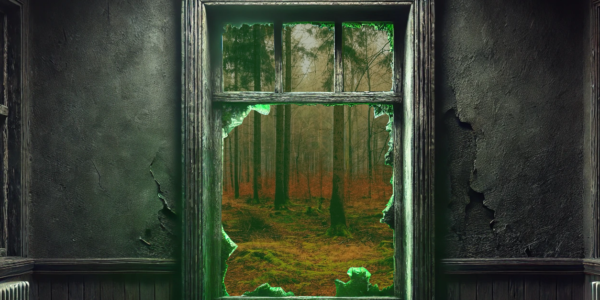
Horror in gaming as we have spoken about before, is the perfect medium for engaging player emotions. This week I want to think about open-world environments which offer a canvas for exploring fear through isolation. Unlike confined linear games, expansive, eerie landscapes stretch the psychological parameters of horror, allowing players to experience the dread of desolation and loneliness on a different scale. By removing the physical and social safety nets that linear games often provide, open-world horror games challenge players to confront a vast, unknown, world, making the feeling of isolation a core element of their horror mechanics. In this post, I will consider the ways that open-world environments enhance player isolation in horror games, considering some relevant research and theories from gaming and psychology to explore the mechanisms that make open worlds so effective in our genre.
Isolation as a Core Element in Horror
Isolation is a fundamental ingredient of horror, heightening vulnerability and amplifying fear (McAndrew, 2020). In open-world games, players navigate vast, and frightening, often desolate spaces where the lack of social interaction or the norms of society works to deepen their sense of loneliness. A form of “mechanized desolation,” as demonstrated in SOMA and Observer, is a good example of this, these games illustrate how technology and environmental design can evoke unease by blending elements of abandonment with the uncanny persistence of lifeless machines (McAndrew, 2020; Wang & Wang, 2022). Such environments not only unsettle players but also provoke reflection on existential themes, like humanity’s fragility and the isolation inherent in advanced technological societies. This intensifies the horror experience, making these games a profound exploration of both psychological and societal fears.
Designing Fearful Spaces
The architecture and geography of virtual spaces play important roles in creating horror atmospheres. McAndrew (2020) discusses the ways that “creepy” environments leverage elements like obscured visibility, lack of refuge, and illegible layouts to trigger primal fears. These unsettling designs exploit our human survival instinct which drives us to seek safety in spaces with clear prospects and secure refuges, the absence of such spaces becomes deeply disorienting to us and amplifies the fear we feel. Open-world games like Silent Hill 2 and The Forest masterfully employ these ideas by using fog-drenched towns and dense, shadowy forests to immerse the player in environments that feel both alive and familiar and, at the same time alien and unwelcoming. These settings challenge navigation and heighten the psychological tension we feel, keeping players on edge as they anticipate the potential of unseen threats lurking, somewhere out there (McAndrew, 2020; Zhang, 2022).
The Role of an aware environment
A recurring motif in horror games is the sensation that the environment itself is aware of the player’s presence. This unique form of isolation blurs the line between the natural and the supernatural, creating an uncanny sense of being watched or pursued. Games such as Darkwood and Miasmata use ambient soundscapes and unexplainable phenomena to evoke this disquieting sensation. In these ‘Supernatural’ environments, players often encounter subtle shifts in lighting, untraceable noises or fleeting shadows that amplify their unease. Ghostly whispers, creaking footsteps, and distant, untraceable sounds become a key tool in crafting this atmosphere, manipulating players’ perceptions and enhancing their fear of the unseen (Demarque & Lima, 2013; Zhang, 2022).
Mechanized Desolation: Technology as Horror
The juxtaposition of abandoned technology and desolation can add a unique layer to open-world horror. In SOMA, the remnants of advanced technology, combined with the lack of human presence, evoke chilling feelings of loss and existential dread. These environments emphasize the absence of humanity while drawing attention to the eerie persistence of machines, which continue their functions despite the absence of purpose. As McAndrew (2020) notes, environments where technology becomes a relic of a forgotten civilization can serve as powerful settings for horror, they offer a stark commentary on humanity’s reliance on technology and the isolation it can leave behind.
The Psychology of Player Vulnerability
Fear in open-world games often stems from the unpredictability of threats. Theories such as “agent detection mechanisms” propose that evolution has primed us to detect potential dangers in their surroundings (McAndrew, 2020). This evolutionary instinct can be heightened in virtual environments that simulate danger through unpredictable and seemingly intelligent adversaries. For instance, in Until Dawn, the player’s limited agency and constrained visibility contribute to a heightened state of vigilance, forcing players to rely on their instincts and quick decision-making under stress (Arnell & Stojanovic, 2020). Such moments of uncertainty and the constant anticipation of threats make such games deeply engaging, as players must balance fear with strategy, further immersing themselves in the experience.
Balancing Exploration and Fear
Open-world horror games are not without challenges, both technical and practical of course. Balancing player exploration with sustained tension can present difficulties because excessive exploration risks diluting fear but overwhelming horror can deter engagement. Games like Subnautica and Outer Wilds achieve this balance by blending exploration with persistent threats, this ensures that players remain on edge as they uncover new mysteries. These games leverage dynamic environmental storytelling and adaptive pacing, which allow moments of awe and wonder to work hand-in-hand with an ever-present possibility of danger. This approach to game design ensures that fear is not only sustained but becomes and integral part of the player’s sense of curiosity, making the experience both engaging and emotionally resonant (Wang & Wang, 2022).
Conclusion
Open-world horror games open up the boundaries of fear, using isolation, surrealism, and desolation to craft deeply personal and immersive horror experiences. By leveraging psychological and environmental design theories, these games immerse players in an atmosphere where every choice feels significant, challenging players to confront not just monsters but their own vulnerability in the face of the unknown.
As gaming technology advances, with it will come improvements in artificial intelligence and environmental simulations, the potential for innovative and even more terrifying open-world horror experiences will continue to grow. These advancements promise deeper immersion, more dynamic storytelling, and new ways to explore fear, pushing the boundaries of what horror games can achieve. Or do they simply represent of the maturing of our imagined horrors into, potentially, real world terrors?
References
Årnell, T., & Stojanovic, N. (2020). Horror game design–what instills fear in the player?: A study on the effects of horror game design theories and level design patterns on player behaviour in a horror environment. [Accessed: 17 January 2025]
Demarque, T. C., & Lima, E. S. (2013). Auditory hallucination: Audiological perspective for horror games. SBC–Proceedings of SBGames, 2013.
McAndrew, F. T. (2020). The psychology, geography, and architecture of horror: How places creep us out. Evolutionary Studies in Imaginative Culture, 4(2), 47-62.
Zhang, Z. (2022). Analysis of the design aesthetics and player emotions of horror games: Take ‘Little Nightmares’ as a case.