Tag: Psychological horror
Research Log
Disorienting the Player: The Power of Non-Euclidean Horror Spaces
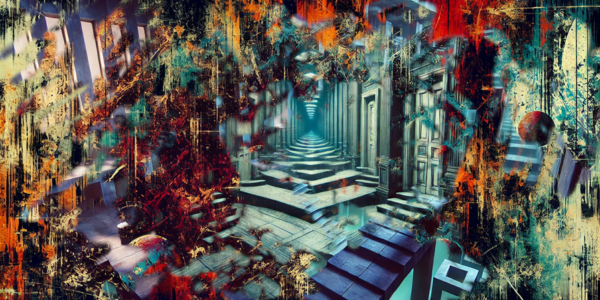
Introduction Horror games thrive on subverting expectations, unsettling players by disrupting their sense of control and security. However, when the environment itself becomes the antagonist, fear reaches an entirely new level. Non-Euclidean horror spaces—environments that defy conventional geometry—are a powerful tool for crafting immersive, mind-bending terror (Osudin, Denisova, & Child, 2024). By manipulating space in…
Research Log
The Architecture of Fear: Why Certain Spaces Feel Wrong

Introduction The unsettling nature of certain architectural space, and architecture of fear if you like, is an interesting topic and has, for a long time, been a point of discussion in fields such as psychology, phenomenology, and horror studies. Some environments evoke a primal fear that seems disconnected from any immediate threat. Architectural spaces have…
Research Log
From Dreams to Nightmares: The Role of Surrealism in Horror Games

Surrealism, an avant-garde movement emerging in the early 20th century, sought to unlock the creative potential of the unconscious mind by juxtaposing irrational images and concepts (Gürelli, 2022). While its initial applications were predominantly found in literature and visual arts, surrealism’s influence has permeated various media, including cinema and video games. In horror games, surrealism…
Research Log
Horror Games: Integrating Cinematic Techniques and Player Agency
Horror games, as we have discussed many times on this blog, occupy a unique space in interactive media. They combine storytelling and gameplay with the unashamed goal of evoking profound emotional responses. Achieving this goal often requires the careful fusion of cinematic techniques and player agency, it’s a juggling act where the designer is striving…
Research Log
Creating Horror Atmosphere with Everyday Objects: Unravelling the Smoking Room Cinematic

Horror has a unique power to stay with us, lingering long after the experience fades. In my latest cinematic piece, ‘The Smoking Room’ explores a space where ordinary items like cigars, smoke, and dolls take on haunting dimensions. In this post, I want to talk about how I used the subtle, out-of-context placements of everyday…
Research Log
Transforming Everyday Objects into Horror

In horror game design, the familiar can become the unexpected, as everyday when items are subtly twisted or used out of context to provoke unease. This unsettling effect is grounded, again, in the psychological concept of the uncanny, where the familiar become hauntingly strange (Virno & Ricciardi, 2005; Freud, 1919). By altering an object’s placement,…