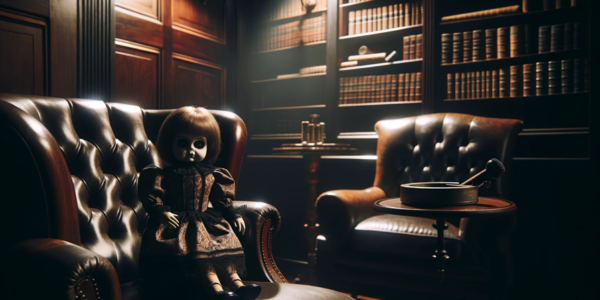
Horror has a unique power to stay with us, lingering long after the experience fades. In my latest cinematic piece, ‘The Smoking Room’ explores a space where ordinary items like cigars, smoke, and dolls take on haunting dimensions. In this post, I want to talk about how I used the subtle, out-of-context placements of everyday objects and technical cinematic elements to create suspense and unease. I’ll dissect how this scene captures the uncanny and invites the viewer to fill in the gaps with their own imagination, offering insights into the craft behind environmental horror.
The Power of Context: Crafting Unease Through Familiarity
In horror, the familiar can be twisted in unexpected ways to take on a terrifying meaning of their own. This is the essence of uncanny horror, where objects we trust or overlook in daily life, like a doll, become anchors of suspense. The smoking room’s doll, seated eerily in an adult environment, subverts expectations and distorts our sense of reality. By placing a child’s toy in a grown-up setting, we’re forced to confront layers of unease, and the unsettling contrast triggers a gut reaction of uncertainty and fascination. These juxtapositions echo themes seen in horror classics, where the uncanny provokes both terror and curiosity.
What Is Uncanny Horror?
Sigmund Freud (a name we hear a lot) coined the term “uncanny” to describe a disturbing feeling that arises when something is simultaneously familiar and alien. We have seen in this blog how this theory has been influential in horror media, particularly for creators seeking to tap into deep-seated psychological discomfort. In the smoking room cinematic, the doll becomes uncanny by its very presence, disrupting the room’s adult sophistication with an inexplicably eerie presence. It’s a powerful technique that subtly manipulates our expectations and unsettles us by suggesting an unknown backstory or an unseen entity.
Lighting and Shadows: Subtle yet Potent Tools of Terror
The scene also utilizes lighting cues to flesh out the atmosphere. Lighting in horror is more than a visual component; it’s a story-teller. Dim, smoky light in the smoking room distorts clarity, creating a space where details are obscured, and shadows hint at possible hidden threats. The faint, ever-present smoke from burning cigars adds an otherworldly, timeless quality to the room, creating ominous shapes that unsettle and encourage the mind to wander. Lighting is used to enhance the scene’s mystery and reinforce the sense of abandonment. The viewer is drawn into the room, pulled deeper into a sense of mystery, and is left to wonder what secrets might hide within the smoking room.
Using Smoke as an Element of Mystery
The use of smoke in the scene goes beyond mere atmospheric effect. Smoke in horror can act as a soft barrier that veils what lies beyond. Here, the smoke frames some of the shots and seems to guide the viewer to focus their attention on the doll, amplifying tension and constraining attention. The faint, slow rise of smoke from cigars abandoned in ashtrays adds a haunting quality that suggests recent, yet unseen, human activity; this smoke plays with the mind, heightening the viewer’s alertness and hinting at the supernatural.
The Smoking Room Doll: Centerpiece of Unnerving Atmosphere
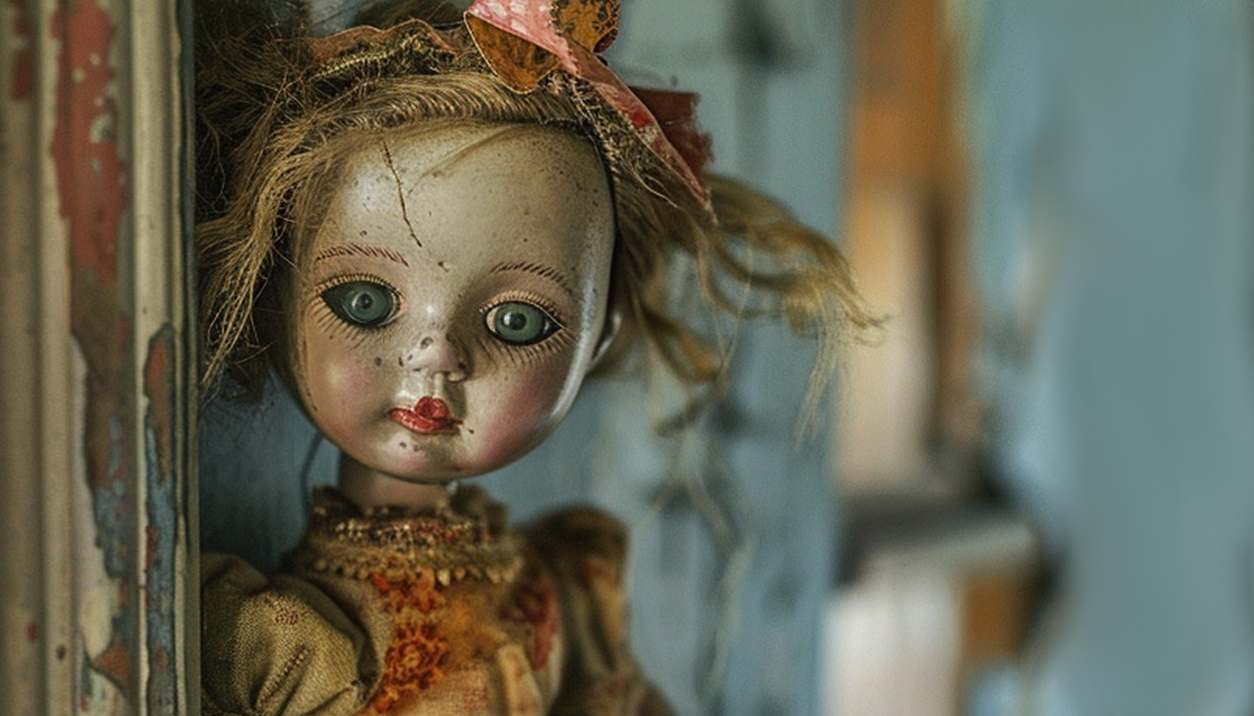
The doll in the smoking room represents the heart of the uncanny. Dolls have a long-standing role in horror as symbols of innocence corrupted, objects that blur the lines between life and inanimate. Seated in an adult setting, the doll feels both out of place and intentionally posed, becoming the focal point of mystery. Viewers are led to wonder: why is the doll there, who put it there, and what unseen force might have left it in this unsettling position?
Unlike traditional horror elements that rely on gore or explicit threats, the doll’s eerie presence is silent but potent. It leaves gaps in the narrative for the viewer to imagine possible dangers, and this interpretive space intensifies its horror. Without uttering a word, the doll communicates an unspoken, invisible presence that fills the room.
The Doll as a Storytelling Device
In horror, effective storytelling often relies on hints rather than answers. The doll functions as a question mark, a prompt for the audience to wonder about its origin and purpose. By avoiding direct exposition, the scene allows the audience to project their fears onto this inanimate figure. As the camera closes in on the doll’s face, the viewer is forced to confront their own fears of the unknown, tapping into the horror of imagination.
Camera Movements: Crafting Tension with a Slow, Unsteady Approach
In this scene, the camera is more than simply functional; it’s a tool to manipulate the viewer’s perception of the world. A slow, creeping movement toward the doll and an eventual zoom into its face creates an unsettling voyeuristic feeling, as though the viewer is intruding upon a space that doesn’t belong to them. This gradual, almost hesitant movement disrupts the viewer’s sense of time and space, enhancing feelings of isolation and discomfort.
The Importance of Unsteady Camera Angles
In horror, the camera’s perspective is an extension of the viewer’s eye. When the camera drifts or moves unsteadily, it creates the impression that something, or someone, unseen might be guiding the viewer. This technique mirrors the human feeling of being watched, subtly amplifying suspense. By approaching the doll in an unhurried, lingering manner, the camera encourages the viewer to anticipate terror, filling them with a growing sense of dread.
Transforming Objects into Haunting Symbols: The Power of Isolation
Isolating an everyday object, such as a burning cigar or a solitary chair, evokes abandonment and gives the impression of recent yet inexplicable presence. The smoking room feels frozen in a moment, as if the previous occupant left in a hurry, leaving behind remnants of their presence. Each item in the room becomes a symbol of absence, and this absence invites viewers to imagine what might have occurred or, more chillingly, what might still be present, watching.
Creating Tension with Everyday Items
Objects like a smoking cigar can tell a story in horror without words. They suggest that someone was recently present, yet no one can be seen. This implication of recent human activity introduces a psychological tension that heightens the sense of isolation and mystery in the room. The mundane takes on a spectral quality, as though each item might carry residual energy from past occupants, leaving viewers questioning what might have happened, or will happen next.
Encouraging Viewer Interpretation: Leaving Space for Fear
One of the core elements of this cinematic sequence is its commitment to ambiguity. By refraining from explaining the doll’s presence, the scene invites viewers to piece together their own narrative. This participatory horror is deeply personal and effective because it allows each viewer to project their unique fears onto the scene. The result is a form of horror that doesn’t fade when the lights come back on, potentially, lingering in the imagination long after.
The Value of Open-Ended Horror
Horror thrives on mystery. The unexplained in the smoking room taps into the primal fear of the unknown, a psychological space where terror is deeply personal. Leaving elements unresolved gives the viewer’s imagination free rein to fill in the blanks, ensuring that the fear they experience feels as though it’s tailored to their own subconscious. This technique makes horror feel less like a spectacle and more like a personal encounter.
Conclusion: Harnessing the Power of Everyday Horror in Design
The smoking room cinematic aims to demonstrate how horror can be effectively crafted through subtle, layered techniques rather than overt scares. By manipulating familiar items and placing them out of context, this scene demonstrates that horror can be more powerful when it’s understated and open-ended. The combination of lighting, sound, and a focus on the uncanny invites the audience to engage with the scene on a personal level, projecting their fears onto the screen. This approach is a testament to the power of human imagination and a demonstration of how simple cinematic techniques can be harnessed within game worlds.
One response to “Creating Horror Atmosphere with Everyday Objects: Unravelling the Smoking Room Cinematic”
[…] Creating Horror Atmosphere with Everyday Objects: Unravelling the Smoking Room Cinematic […]