Tag: Horror Atmosphere
Research Log
Why the Scariest Moments in Horror Games Are the Ones You Don’t See
The Terrifying Power of Implied Horror A creaking floorboard or a mysteriously flickering light, these moments, where nothing is seen but something, not quite right, is felt, have the power to unnerve players more than the most bloodthirsty monster encounter. So, why does absence of horror sometimes feel more terrifying than its presence? What is…
Research Log
The World as the True Antagonist: Conceptualizing Hostile Environments in Horror Game Design
Introduction Horror games traditionally frame their antagonists as tangible threats, monsters, murderers, or supernatural entities. However, some games subvert this paradigm by making the environment itself the primary source of terror. In such cases, the setting is no longer a passive backdrop but an active agent of dread, fundamentally shaping the player’s experience. This post…
Research Log
The Architecture of Fear: Why Certain Spaces Feel Wrong

Introduction The unsettling nature of certain architectural space, and architecture of fear if you like, is an interesting topic and has, for a long time, been a point of discussion in fields such as psychology, phenomenology, and horror studies. Some environments evoke a primal fear that seems disconnected from any immediate threat. Architectural spaces have…
Research Log
Creating Horror Atmosphere with Everyday Objects: Unravelling the Smoking Room Cinematic
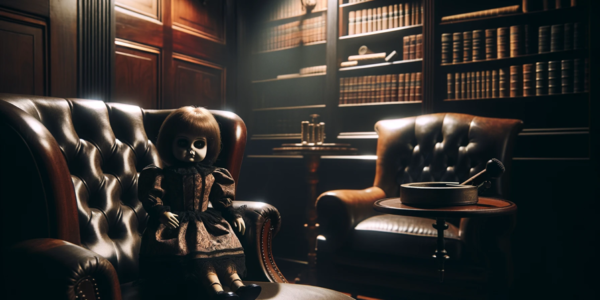
Horror has a unique power to stay with us, lingering long after the experience fades. In my latest cinematic piece, ‘The Smoking Room’ explores a space where ordinary items like cigars, smoke, and dolls take on haunting dimensions. In this post, I want to talk about how I used the subtle, out-of-context placements of everyday…
Research Log
Transforming Everyday Objects into Horror

In horror game design, the familiar can become the unexpected, as everyday when items are subtly twisted or used out of context to provoke unease. This unsettling effect is grounded, again, in the psychological concept of the uncanny, where the familiar become hauntingly strange (Virno & Ricciardi, 2005; Freud, 1919). By altering an object’s placement,…