Category: Horror Game Design
Research Log
How colour Elevates Fear in Horror Video Games: A Deep Dive
Introduction colour isn’t just a design element, it’s a language. In horror video games, this language speaks directly to our emotions, weaving fear, tension, and unease into the gameplay. Through intentional colour choices, developers create immersive worlds where players feel genuinely unsettled. This article delves into the The Impact of Colour in Horror Video Games,…
Research Log
Horror Games: Integrating Cinematic Techniques and Player Agency

Horror games, as we have discussed many times on this blog, occupy a unique space in interactive media. They combine storytelling and gameplay with the unashamed goal of evoking profound emotional responses. Achieving this goal often requires the careful fusion of cinematic techniques and player agency, it’s a juggling act where the designer is striving…
Research Log
Transforming Everyday Objects into Horror

In horror game design, the familiar can become the unexpected, as everyday when items are subtly twisted or used out of context to provoke unease. This unsettling effect is grounded, again, in the psychological concept of the uncanny, where the familiar become hauntingly strange (Virno & Ricciardi, 2005; Freud, 1919). By altering an object’s placement,…
Research Log
Beneath the surface: Thinking about crafting suspense in horror games
Watching horror movies or playing horror games makes it easy to forget that horror is one of the most intricate genres. Crafting suspense in horror game design relies on a multitude of subtle, atmosphere-driven techniques to captivate and terrify audiences. Unlike more overtly action-based horror, environmental horror leverages setting and sensory cues to evoke fear…
Research Log
Creating a Simple Horror Scene in Unreal Engine: A Step-by-Step Guide
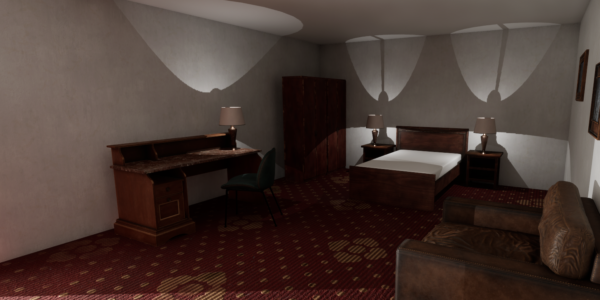
When designing a horror game, the atmosphere is everything. A single room, a flickering light, and a strategically placed shadow can evoke fear and anticipation. In this blog post, I’ll create a basic horror scene in Unreal Engine. I have focused on lighting and interaction. This is a simple setup: a hotel room where a…