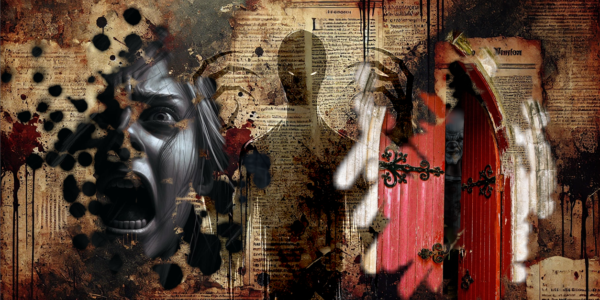
Watching horror movies or playing horror games makes it easy to forget that horror is one of the most intricate genres. Crafting suspense in horror game design relies on a multitude of subtle, atmosphere-driven techniques to captivate and terrify audiences. Unlike more overtly action-based horror, environmental horror leverages setting and sensory cues to evoke fear without explicit violence and, for me, requires a little more in the way of nuance. Environmental horror incorporates elements such as lighting, sound, spatial design, and the deliberate placement of ordinary objects, often in out-of -the-ordinary context to build suspense and create an atmosphere of dread. Each of these components contributes uniquely to constructing an immersive environment that suggests an underlying threat, engaging the audience’s imagination by leaving certain details unexplained (McAndrew, 2020).
The Subtle Science of Suspense in Horror
To me, the most effective horror creates and maintains tension in the player through carefully balancing what is visible and what is hinted at. This approach to crafting suspense in horror game design differs fundamentally from traditional shock-value horror by engaging the viewer’s psychological responses rather than relying solely on graphic imagery. McAndrew (2020) explored environmental psychology in horror and found that settings associated with mystery and low legibility induce heightened awareness and anxiety making them ideal for horror environments. The concept of suspense here is not merely about sudden scares, it involves a prolonged sense of unease that permeates each frame (van Elferen, 2016). Rather than sudden shock, the horror effect is achieved through restrained, layered visual storytelling, allowing horror to “creep” into the viewer’s experience gradually.
Environmental Cues and Their Psychological Impact
Environmental details, such as lighting angles or the arrangement of objects also play a vital role in evoking a creeping feeling of dread. Studies indicate that settings which lack predictability or legibility amplify fear responses by disrupting the viewer’s sense of safety and control. For instance, the Gothic aesthetic, with its dark, labyrinthine corridors, mirrors the anxiety that stems from disorientation and isolation (Peaty, 2019). The impact of these settings, as explained by Appleton’s (1975) “Prospect-Refuge Theory,” suggests that environments where we cannot clearly see what might be hiding heightens our sense of vulnerability, a concept widely utilized in horror media to unnerve audiences (McAndrew, 2020).
Lighting as a Tool for Subconscious Fear
Light, or the lack thereof, in horror is used to manipulate viewer (or player) perceptions and can be manipulated to alter the viewer’s emotional responses. Low lighting with deep, seemingly impenetrable, shadows trigger our primal fears of the dark, hinting at concealed dangers or monsters, as highlighted by Ammer’s (2020) study on lighting in horror cinema. For example, soft, dim lighting can evoke loneliness and vulnerability, while sudden bursts of unnatural colors—such as cold blues or ominous reds—trigger subconscious associations with danger or instability according to Ammer (2020). Lighting choices, therefore, can be artfully used like paint to amplify dread by distorting the audience’s sense of reality and safety, creating an “uncanny” space where familiar elements become eerie (van Elferen, 2016).
Object Placement and Horror through Ordinary Details
The strategic placement of everyday objects within horror settings is instrumental in crafting suspense. By displacing or subtly altering ordinary items, such as a child’s toy or an ajar door, creators can suggest the presence of an unseen entity, feeding the audience’s fear of the unknown. According to McAndrew (2020), these cues activate “agent detection mechanisms” in the brain, a psychological response evolved to protect us from unseen threats. This response is crucial in horror, where items that might otherwise be comforting become imbued with dread simply by their placement or by being slightly out of place.
The Role of Sound and Silence in Building Horror
Horror is almost never silent… but sometimes, it is. Sounds in horror often act as invisible antagonists, proving that shaping the viewer’s experience doesn’t always require visual cues. Subtle auditory cues like distant footsteps or a faint hum can introduce a sense of unease, while silence can be just as powerful as a tool for suspense, amplifying the audience’s anticipation (van Elferen, 2016). Van Elferen (2016) suggests, sound in horror is most effective when it hints at an unseen presence, compelling the audience to project their own fears onto the scene creating their own monsters which lurk just out of sight. This principle, which can be seen in horror games as well as cinema, taps into the Freudian concept of the “uncanny,” where seemingly benign sounds become associated with something sinister lurking beyond sight (Peaty, 2019).
Ambiguity: The Unseen Threat
Leaving details ambiguous is a time-honored technique in horror. Audiences tend to fear the unknown more than the known. McAndrew (2020) discusses how “creepiness” arises from an ambiguity of threat, where the audience cannot be sure if there is danger or not. Such ambiguity keeps viewers, or players attention fixated and their anxiety heightened. Van Elferen’s (2016) work supports this, asserting that when horror soundscapes lack a definitive source, viewers are forced to rely on their imagination which is a potent contributor to sustained fear. The suggestion of a threat (rather than its explicit depiction) can create a suspenseful, almost, claustrophobic atmosphere, engaging the audience’s mind and making the horror experience deeply personal (Ammer, 2020).
Conclusion
Crafting suspense in horror game design through environmental details involves a sophisticated understanding of psychology and sensory manipulation. Through the application of subtle lighting, sound, and object placement, designers can evoke dread without explicit displays of terror. This restrained approach to horror respects the power of the viewer’s imagination, filling them with a lingering fear that extends beyond the immediate experience. There is no need to lead players by the hand to scary places, the scariest places are, often in our own minds. Through environmental cues that trigger innate psychological responses, horror narratives can build suspense that resonates long after the final scene fades, making the experience of fear intimate and memorable (McAndrew, 2020; van Elferen, 2016).
References
Ammer, S. M. E. I. (2021). Content analysis of lighting and color in the embodiment of fear concept in horror movies: a Semiotic approach. Information Sciences Letters, 9(2), 135-142.
McAndrew, F. T. (2020). The psychology, geography, and architecture of horror: How places creep us out. Evolutionary Studies in Imaginative Culture, 4(2), 47-62.
Peaty, G. (2019). Gothic Games. Aeternum: The Journal of Contemporary Gothic Studies, 6(2), ii-iv.
Van Elferen, I. (2016). Sonic horror. Horror Studies, 7(2), 165-172.