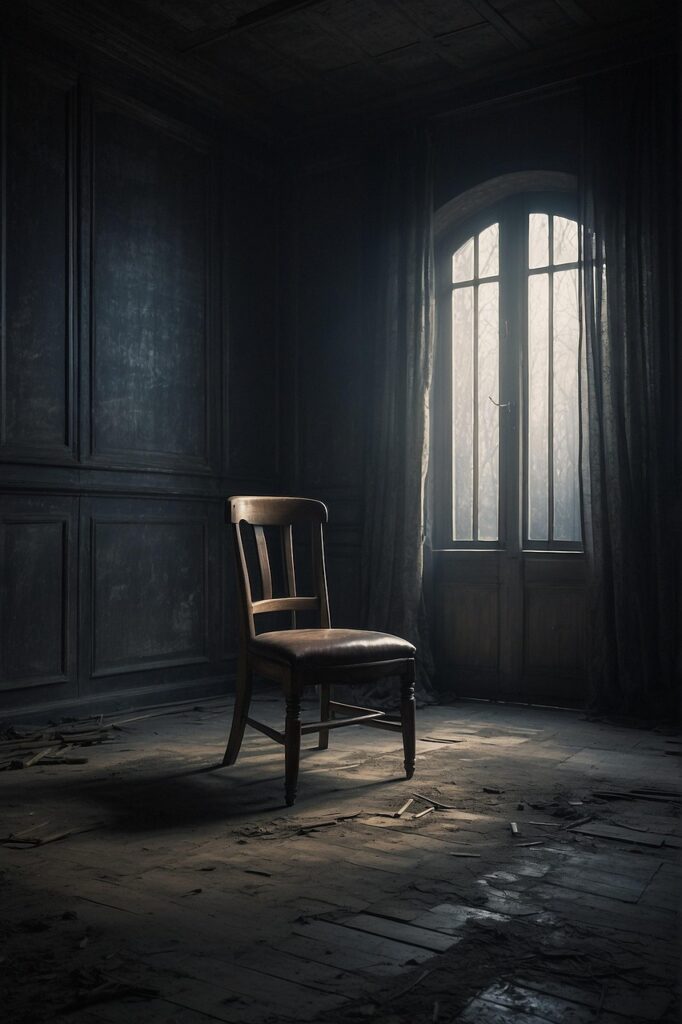
Have you ever experienced a hallway that seems to stretch for too long, a silence that seems to last for one second more than it should? the magically haunting thing about these moments in Horror Game Design is that they don’t scream… they wait. And in the waiting, something inside us begins to unravel, it would seem that there is something there, something insidious in that emptiness, waiting in the silence.
Why do certain spaces fill us with dread, more because of what they lack, than what is there? And how can we help absence itself become the most terrifying presence of all?
I am drawn to spaces that haunt rather than chase, I find myself endlessly intrigued, obsessed even, with the eerie power of non-responsiveness. I don’t just try to create fear… my goal is to build spaces that stare back at you.
The Architecture of Silence
Fear thrives in emptiness. Not in the emptiness of minimalism, but the kind that lingers like a void left behind, the kind of void that is left where once there was presence, an empty chair… an unmade bed, an unlocked door. Spatial silence, what I think of as environmental non-responsiveness, is one of horror’s most potent tropes, yet it finds itself one of the most underused tools, particularly in games.
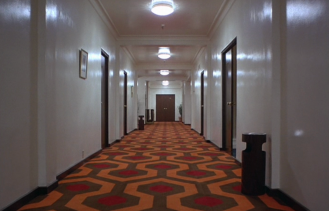
Negative space, in visual design, is the area where nothing happens… boring huh? well, what nothingness creates is potential… in supernatural horror game design, negative space is where anything ‘could’ happen. Evans (2024) discusses how vast, quiet stretches in games like Subnautica create a looming sense of dread. It’s a dread generated, not through threats, but through our imagination’s compulsion to fill in the blanks. Of course, we can see this extensively in cinema too: Kubrick’s sterile hotel corridors in The Shining stretch endlessly, not because they lead somewhere, but because they might.
Game environments that do nothing, no ambient sound, no interactivity, no narrative push, can evoke fear not through confrontation, but through the, all more powerful, force of suggestion. According to Jenkins (2004), environments themselves can become narrative. And in horror, silence tells a story louder and more terrifying than sound.
Horror Game Design Takeaway Build tension by designing areas that refuse to respond. Let absence become the loudest scream.
Stress, Stillness, and the Mind in Panic
Long before we took our place as the destroyers of our planet, our ancestors had another roll, they were prey! Our bodies have learned over millennia to constantly be aware of the potential of becoming somethings next meal! Our body doesn’t care whether the threat is real or symbolic, deciding this would sacrifice valuable survival seconds… That means that, as designers, we can make our fictional threats feel very real. Horror game players experience all the physical symptoms of danger (heart racing, shallow breath) even when they are facing nothing at all. This is the dark magic of spatial dread: it bypasses content and attacks our deepest, most primal cognition.
Appleton’s (1975) work on landscape experience demonstrates that us humans seek legibility in our surroundings. When a space offers no cues (no enemy, no ally, no change) we feel powerless. Younis & Fedtke (2024) noted that games like OMORI tap into this with depopulated environments that imply trauma rather than depict it. The result? A player haunted by feelings they can’t explain. It’s taking the art of horror design beyond the jump scare. It’s existential erosion.
Liminal Dread and the Uncanny Loop
Players return to horror not because they want to escape reality necessarily, but because they have a drive to see it differently. Liminal spaces such as hallways, stairwells or carparks, are not inherently frightening. But when something is not quite right about them, maybe they’re too clean, too quiet, too empty, they become eerie thresholds between the real and the unreal.
Fisher’s concept of the eerie describes fear born from absence: of life, of function, of response. The uncanny, as per Freud, comes when something familiar turns slightly wrong. The horror is not in the unknown, but in what should be familiar made strange.
Digital spaces can reflect this beautifully. The looping hallway of P.T., the fog-drenched town of Silent Hill, the empty malls of liminal meme culture, all of these offer us nothing. But, in that nothing, we find ‘Something’, something terrifying: a reflection of our own mind which, despite ourselves, continues to seek structure in the void.
Horror Game Design Takeaway Horror emerges when a space feels like it should be alive—but isn’t. Make the familiar uncanny by subtly removing purpose, presence, or response.
Conclusion: The Room That Watches Back
We have all felt ‘creeped out’ in our lives, have something to tell about ‘that time when you were convinced there was a ghost’ think about ALL the stories you tell, or ALL the stories you have been told about such things, what do they all have in common? They all happen in a ‘Place’ and very few feature a battle with a monster. Space doesn’t need a monster to be haunted. Sometimes, the scariest thing is walking into a room that doesn’t feel like it cares that you’re there.
Whether through architectural silence, liminal drift, or environmental indifference, horror games remind us that dread is not always about what hunts us but what haunts us, what doesn’t notice us at all.
References
Appleton, J. (1975). The Experience of Landscape. Wiley.
Kirkland, E. (2009). Horror Videogames and the Uncanny. In Perron, B. (Ed.), Horror Video Games: Essays on the Fusion of Fear and Play, pp. 64–78. McFarland.