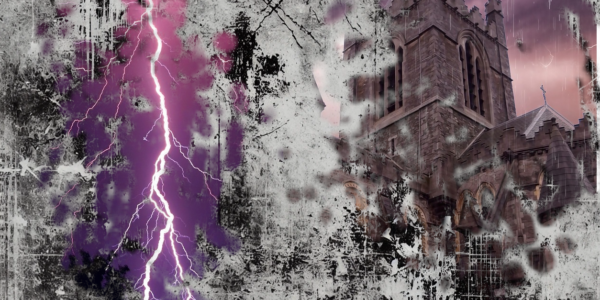
Dynamic weather systems have revolutionized the interactive world of video games. Weather is bigger than us, it has no sympathy for or fear of us and regardless of how powerful we become as a species, weather still has the power to crush us like ants! This makes the inclusion of weather systems in horror games very powerful; they can play a significant role in the genre by blending natural and supernatural elements to create immersive and chilling experiences. The integration of weather systems into horror games enhances narrative immersion, can modify gameplay dynamics, and evokes, sometimes very strong, emotional responses, ensuring players remain engaged and unnerved. In this blog I want to explore the role of dynamic weather in horror games, by considering its application in supernatural narratives.
Dynamic Weather as a Narrative Tool
Weather in video games can be seen as more than simple atmospheric backdrop; weather can become an active narrative device that shapes player experience (Roberts & Patterson, 2017). In horror games, dynamic weather, such as thunderstorms or chilling fogs, can be deployed to introduce tension, suspense, and unpredictability. According to Vachiratamporn et al. (2014), the interplay between environmental changes and player perception can manipulate affective states, enhancing fear and immersion.
Haunted Thunderstorms
I think even those of us who are not particularly bothered by thunderstorms can probably remember some point in our distant past when we were. Thunderstorms hide ghosts and monsters, right? Fear them or love them, thunderstorms have long been associated with fear and unease, and, because of this, they are a staple in horror game design. The sensory overload caused which is caused by booming thunder and crackling lightning is an excellent tool to distort player awareness and create an environment ripe for scares. Games like Outlast 2 utilize thunderstorms to limit visibility and add auditory chaos, pushing players to rely on fleeting glimpses of safety or danger (Garner et al., 2010). The unpredictability of these storms mirrors the chaotic nature of the supernatural entities which often feature in such narratives.
Because storms are so powerful, beyond most of our comprehension, allusions to greater mysteries can also be introduced through thunderstorms, hinting at forces so powerful that they transcend the immediate environment, deepening the sense of dread and anticipation.
Haunting Fogs
Fog is a recurring motif in horror games. So scary is fog that it has warranted two popular movies at least (The Fog & The Mist). Fog often symbolizes mystery and concealment. Haunted fogs, infused with supernatural elements, obstruct the players perception and manipulate their sense of reality. In Silent Hill, for example, fog acts as a thematic and mechanical tool, symbolizing psychological unrest while hiding threats (Navarro Pérez & Soutullo Sobral, 2020).
The subtle interplay of fog with light and sound can be used to suggest disruptions or irregularities, hinting at an underlying presence or phenomenon that the player can only sense rather than fully grasp. Such techniques enhance immersion without overtly revealing their nature.
Gameplay Mechanics and Weather
Used skilfully, dynamic weather significantly influences gameplay mechanics, forcing your players to adapt to evolving conditions. According to Parnandi & Gutierrez-Osuna (2015), using such mechanics heightens engagement by introducing unpredictable challenges such as:

Limited Visibility: Fog and heavy rain reduce a player’s visibility, increasing their vulnerability. This mechanic compels players to rely on sound or memory and amplifies tension.
Environmental Hazards: Thunderstorms can create dangerous environmental conditions, slippery surfaces, floods, falling debris, or even damage from lightning strikes, adding to the survival element of gameplay.
Sound Disruption: The noise from wind and rain obscures critical auditory cues, disorienting players and heightening suspense (Garner et al., 2010).
Emotional Resonance and Player Immersion
The emotional impact of dynamic weather is profound. As I have mentioned earlier, most of us have a childhood memory of storms hidden away somewhere and for good reason, storms are powerful, more powerful than any defence humans have against them! As a result, storms evoke sensory overload and fear, while fog creates claustrophobia and isolation. Roberts & Patterson’s (2017) findings indicate that immersive weather systems can significantly enhance realism and emotional engagement, crucial for horror games. By tying weather effects to key narrative moments, designers can evoke intense reactions, such as dread during a climactic storm or relief as fog dissipates to reveal safety.
Links with Supernatural Elements
Dynamic weather bridges the gap between narrative and mechanics, providing a seamless integration of atmosphere and gameplay. In supernatural horror, weather often mirrors ore foreshadows the presence of malevolent forces. For instance, Fatal Frame leverages storms to heighten the tension of haunted settings (Navarro Pérez & Soutullo Sobral, 2020). The use of weather to subtly imply a broader, perhaps cosmic, significance without fully revealing it can add layers of intrigue and mystery that keep players guessing at what might happen next, what might the thunder foretell, or what does the fog conceal.
Challenges and Innovations in Weather Design
As with anything in games, while dynamic weather systems enhance gameplay, their design poses challenges. Balancing realism with performance demands careful resource management (Roberts & Patterson, 2017). Emerging technologies, such as AI-driven weather systems and ray tracing, enable hyper-realistic effects, offering new possibilities for immersive horror experiences but there is some time yet before weather systems are seamlessly realistic within the capacities of most modern gaming systems.
Conclusion
Dynamic weather systems amplify the atmospheric depth of horror games, intertwining gameplay and narrative to evoke powerful emotional responses. By leveraging supernatural elements and carefully placed hints at larger, unknowable forces, developers can create rich, immersive, worlds that leave lasting impressions on players. Future advancements in weather simulation promise even greater potential, ensuring that horror games remain at the forefront of interactive storytelling.
References
Garner, T., Grimshaw, M., & Abdel Nabi, D. (2010). A Preliminary Experiment to Assess the Fear Value of Preselected Sound Parameters in a Survival Horror Game.
Navarro Pérez, A., & Soutullo Sobral, S. (2020). Game Design and Implementation of Physics-Based Interactions between Player and Environment Elements. Chalmers University of Technology.
Parnandi, A., & Gutierrez-Osuna, R. (2015). A Comparative Study of Game Mechanics and Control Laws for an Adaptive Physiological Game. Journal of Multimodal User Interfaces, 9(1), 31–42.
Roberts, S., & Patterson, D. (2017). Virtual Weather Systems – Measuring Impact within Videogame Environments. Proceedings of the Australasian Computer Science Week.
Vachiratamporn, V., Moriyama, K., Fukui, K., & Numao, M. (2014). An Implementation of Affective Adaptation in Survival Horror Games. Proceedings of the IEEE Games Innovation Conference.